
When I first dipped my toe into the world of caviar, I made every mistake in the book. I paid too much for mediocre product, I served it wrong, and I thought the only "real" caviar was Beluga – which, let’s be honest, is practically mythical for most of us now. Years of tasting, talking to purveyors, and yes, sometimes throwing good money after bad, taught me a lot. The biggest misconception? That caviar is only for the super-rich, or that it’s all the same salty fish eggs. Neither is true. You can enjoy incredible caviar without taking out a second mortgage, but you need to know what you’re doing.
The Truth About «Real» Caviar and Why You’re Probably Overpaying
Let me cut through the noise right away: Beluga caviar, while legendary, is largely off-limits legally and astronomically expensive when available. If you think you’re getting "Beluga" for a steal, you’re not. You’re getting ripped off. The market today is dominated by sustainably farmed sturgeon, and the quality is often superior to what wild harvest offered decades ago. The key is understanding the species, not just the name.
What’s the Difference Between Osetra and Kaluga?
These are my workhorses, my go-to choices. Osetra (Acipenser gueldenstaedtii) typically offers a nutty, briny flavor profile with a firm, medium-sized egg. Within Osetra, you’ll find variations like "Royal Osetra" – which often denotes a larger, lighter-colored egg with a buttery finish. Kaluga (Huso dauricus) is a different beast, often hybridized with Amur sturgeon (Acipenser schrenckii) to create what’s known as Kaluga Hybrid. These eggs are larger, often dark, and deliver a rich, creamy, almost buttery taste. Think of Osetra as a fine Chardonnay and Kaluga as a richer, more opulent Burgundy. Both excellent, just different experiences.
Avoiding «Roe» vs. «Caviar» Traps
Here’s a critical distinction many casual buyers miss: not all fish roe is caviar. Only sturgeon roe is true caviar. Salmon roe (ikura), tobiko (flying fish roe), and masago (capelin roe) are delicious in their own right – fantastic on sushi, for example – but they are not caviar. They also cost a fraction of the price. If a product is labeled "caviar" and costs under $20 for an ounce, it’s almost certainly not sturgeon caviar. Don’t fall for clever marketing. Always look for the sturgeon species name on the label.
My Go-To Caviar Types and Why I Swear By Them
After years of sampling everything from obscure regional finds to the big-name imports, I’ve narrowed down my preferences. These are the caviars I consistently recommend and buy myself, knowing they deliver exceptional value and flavor.
My Love Affair with Royal Osetra
For consistent quality and that classic caviar experience, I always gravitate towards a good Royal Osetra. Specifically, I’ve had fantastic experiences with the Royal Osetra from Petrossian (expect to pay around $120-$150 for 30g) and Caviar Russe (similarly priced). What makes it great? The eggs are firm but not hard, popping with a delicate brininess that finishes with a nutty, almost hazelnut-like warmth. The color varies from dark olive to golden amber, and the larger eggs simply feel more luxurious on the palate. It’s versatile enough for a first-timer but complex enough to satisfy a seasoned connoisseur. This is my benchmark for what caviar should taste like.
The Unexpected Delight of Kaluga Hybrid
If you’re looking for something with a bit more "oomph," the Kaluga Hybrid is where it’s at. I often opt for the varieties offered by Tsar Nicoulai (around $100-$130 for 30g). These are typically larger eggs, ranging from dark grey to light brown, and they offer an incredibly creamy, buttery mouthfeel. The flavor is rich, complex, and less intensely briny than some Osetras, with a long, satisfying finish. It’s a fantastic alternative to the now-rare Beluga, often called "River Beluga" for good reason. If you like a bold, decadent experience, go for Kaluga Hybrid. It holds its own wonderfully when paired with slightly richer accompaniments.
White Sturgeon: The Everyday Luxury
For a more accessible, yet still genuinely delightful, option, I direct people to White Sturgeon caviar (Acipenser transmontanus). Brands like Sterling Caviar produce excellent White Sturgeon, often for around $70-$90 for 30g. The eggs are typically medium to large, with a clean, earthy flavor and a pleasing firmness. It lacks some of the nuanced complexity of a top-tier Osetra or Kaluga, but it’s a fantastic entry point. It still delivers that signature "pop" and savory finish that makes caviar so special, without breaking the bank. Don’t dismiss it as "lesser" – it’s simply a different, more straightforward flavor profile that’s perfect for casual indulgence or larger gatherings.
How to Serve Caviar Like a Pro (And Not Ruin It)
You can buy the best caviar in the world, but if you serve it incorrectly, you’re throwing money away. Caviar is delicate. Treat it with respect, and it will reward you.
-
The Chill Factor: Getting Temperature Right
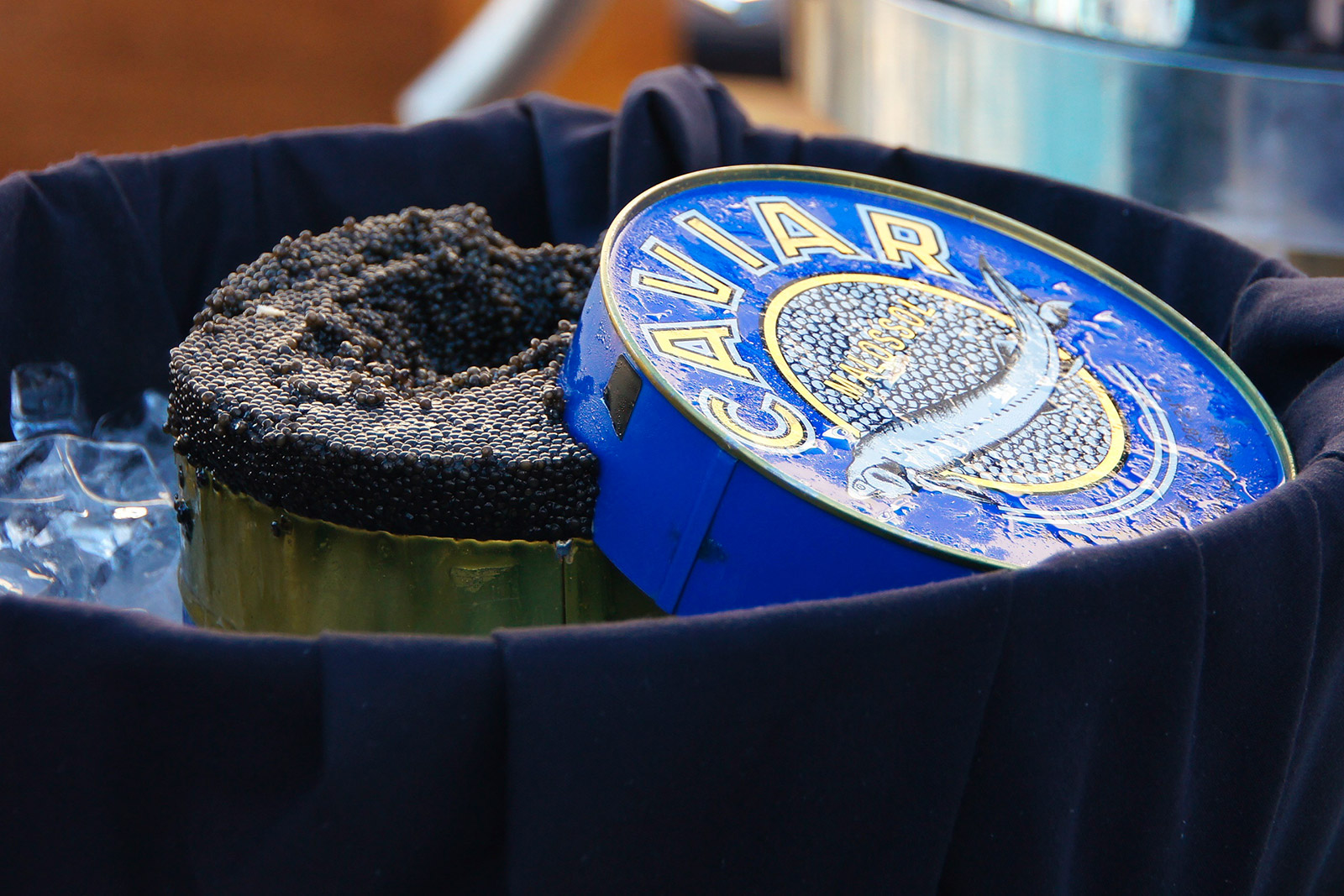
Caviar must be served very, very cold. Not frozen, but close to it. I always place the unopened tin or jar on a bed of crushed ice for at least 15-20 minutes before serving. A small bowl or dish filled with ice, with the caviar tin nestled in it, is ideal for presentation and maintaining temperature throughout the duration of enjoyment. If it’s too warm, the eggs become soft, mushy, and lose their vibrant flavor. Aim for about 28-32°F (-2 to 0°C).
-
Utensils Matter: Why Metal is the Enemy
This is non-negotiable. Do not – I repeat, do not – use metal spoons to serve caviar. Metal imparts a metallic taste that clashes horribly with caviar’s delicate flavor. Always use a mother-of-pearl spoon, bone, glass, or even plastic. Mother-of-pearl is traditional for a reason: it’s completely neutral and allows the caviar’s true taste to shine. They’re inexpensive and a worthwhile investment.
-
The Perfect Pairing: Blinis, Crème Fraîche, and Beyond
Simplicity is key. The goal is to let the caviar be the star. My preferred accompaniments are:
- Blinis: Small, savory Russian pancakes. Warm them slightly, but don’t toast them crunchy.
- Crème fraîche: Full-fat, unsweetened. It provides a creamy, slightly tangy counterpoint that doesn’t overpower the caviar. Avoid sour cream; it’s too acidic.
- Toast points: Lightly toasted, unbuttered.
- Optional: Finely minced chives or shallots. Use these sparingly.
A small dollop of crème fraîche, a tiny spoonful of caviar, perhaps a whisper of chive, all on a blini or toast point. That’s it. For drinks, a very dry, crisp Champagne – a Brut Nature or Blanc de Blancs – is classic. Ice-cold vodka also works beautifully, served neat.
Don’t Waste Your Money: Types to Avoid (And Why)
I’ve seen too many people spend good money on caviar that just isn’t worth it. While personal taste is subjective, some "caviar" products consistently disappoint or are simply not what they claim to be. Here’s my advice: steer clear of these, especially if you’re trying to get a genuine caviar experience.
The "Mystery Caviar" Pitfall
If the label doesn’t clearly state the sturgeon species (e.g., Osetra, Kaluga, Sevruga, White Sturgeon), or if it just says "imported caviar" without specifics, put it back. Reputable purveyors are always transparent about their source and species. These mystery tins are often lower-grade roes, poorly processed, or even mislabeled non-sturgeon products that won’t deliver the texture or flavor you expect from true caviar. You’re gambling, and in my experience, the house usually wins.
Overpriced Sevruga: A Diminished Return
Sevruga (Acipenser stellatus) historically occupied a prestigious spot alongside Beluga and Osetra. It’s known for its small, dark eggs and intensely briny flavor. However, with the rise of superior farmed Osetra and Kaluga, I find modern Sevruga often doesn’t justify its price point. It can be overly salty and lacks the nuanced complexity and buttery finish of its more expensive cousins. For the money, you can usually get a much more satisfying experience from a good quality White Sturgeon or a entry-level Osetra. I rarely recommend it anymore unless it’s from a very specific, trusted producer known for exceptional Sevruga.
«Pressed Caviar» – Unless You Know What You’re Getting
Pressed caviar (Paiusnaya) is made from fragile or broken eggs, often from different sturgeon species, pressed into a jam-like consistency. It has a much more intense, concentrated flavor. While some connoisseurs appreciate it, it’s not the "pop" experience most people associate with caviar. For a first-timer or someone looking for that classic egg texture, it will be a disappointment. It’s often more expensive than whole-grain caviar due to the labor involved, yet it’s made from imperfect eggs. Save this for when you’ve developed a deeper understanding of caviar profiles.
Decoding Caviar Grades: What to Look for Beyond the Price Tag
You’ll often see caviar labeled as Grade 1 or Grade 2. This isn’t just marketing fluff; it’s a real system that helps you understand the quality of what’s in the tin. Don’t assume higher price automatically means Grade 1. Some purveyors will try to pass off lower grades at premium prices.
| Characteristic | Grade 1 Caviar | Grade 2 Caviar |
|---|---|---|
| Egg Integrity | Intact, firm, clearly separated eggs (over 90%) | Slightly less firm, some broken eggs allowed (up to 30%) |
| Color Uniformity | Consistent, bright, and often lighter shades | Varied, darker, less consistent color |
| Size Uniformity | Large, uniform egg size | Smaller, less uniform egg size |
| Flavor Profile | Delicate, complex, distinct nuances | More robust, often saltier, less nuanced |
| Texture | Distinct "pop" on the palate, creamy finish | Softer, sometimes slightly mushy, less defined pop |
| Salt Content | Lower (Malossol), allowing natural flavor to shine | Higher, used for preservation and to mask imperfections |
Grade 1 vs. Grade 2: The Visual Cues
When you open a tin of Grade 1 caviar, you should see perfectly formed, glistening eggs that separate easily. The color will be consistent, and the eggs will be relatively large for their species. Grade 2 will look a bit more jumbled. There might be more liquid in the tin, and the eggs will appear softer, with some breakage evident. Visually, it’s a clear difference once you know what to look for. Always ask about the grade if it’s not clearly stated.
Why Egg Firmness is Everything
For me, egg firmness is the most critical indicator of quality. A truly great caviar egg will have a delicate outer membrane that ruptures with a gentle pressure from your tongue, releasing a burst of flavor. This is the "pop" everyone talks about. Grade 2 caviar often lacks this. The eggs might be too soft, turning to mush, or too hard and rubbery if over-cured. That perfect balance of firmness and fragility is what sets Grade 1 apart and makes the experience truly sublime.
Common Caviar Myths Debunked: Your Burning Questions Answered
Over the years, I’ve heard every possible question and misconception about caviar. Let me clear up a few of the most frequent ones.
How long does caviar really last after opening?
This is crucial. Once you open that tin, oxygen becomes the enemy. Caviar should be consumed within 2-3 days, maximum. Some purveyors might stretch it to 5, but I wouldn’t risk it. The delicate flavors diminish rapidly, and the texture can suffer. Always reseal the tin tightly and keep it on ice in the fridge.
Is it ever okay to freeze caviar?
Absolutely not, unless you’re intentionally trying to ruin it. Freezing caviar destroys its delicate cell structure. When thawed, the eggs will be mushy, watery, and lose their signature "pop" and nuanced flavor. Caviar is meant to be enjoyed fresh and cold, never frozen. If you have extra, share it or eat it. Don’t freeze it.
Where should I buy my caviar to ensure quality?
Stick to reputable, specialized purveyors. I trust Petrossian, Caviar Russe, and Tsar Nicoulai. These companies have decades of experience, maintain strict cold chains, and stand by their product. Avoid buying caviar from generic grocery stores or online retailers without a clear focus on luxury seafood. Their turnover might be slow, meaning you could end up with older, less fresh product. A specialized purveyor guarantees freshness and proper handling.
The Absolute Minimum for Your First Caviar Experience
Don’t overthink it, but don’t cut corners: get a 30g tin of a good quality White Sturgeon or a classic Osetra, ensure it’s served ice-cold with a mother-of-pearl spoon, and enjoy it simply with blinis and crème fraîche. That’s all you need.
 Mollie Nash